Buying Used Baby and Kids' Gear: A Safety Checklist for Holiday Shoppers
Secondhand cribs, car seats, strollers and toys can save a lot of money. Here's how to check for recalls, spot red flags and know which items to skip.
By Orbispin··7 min read
Holiday shopping and a new baby on the way are two of the biggest reasons people start looking at secondhand kids' gear this time of year. It makes sense. Children outgrow strollers, high chairs, bouncers and toys in months, so local listings are full of things that barely got used, often for a fraction of the new price. Most of it is perfectly fine. Some of it isn't, and with kids' products the difference can matter a lot.
This guide walks you through how to check used baby and kids' items before you pay. It covers recall searches, product-by-product red flags, and the few things that are better bought new or skipped entirely.
Start with a recall check, every time
A recall check is the most useful thing you can do, and it only takes a couple of minutes. Before you meet a seller, ask them for the brand, the model name or number, and the manufacture date. On most baby gear you'll find these on a sticker or a stamped label underneath or on the back of the frame.
Then search the official databases:
- United States: the Consumer Product Safety Commission's recall search at cpsc.gov/Recalls. For car seats, also check NHTSA's recall lookup at nhtsa.gov/recalls.
- Canada: Health Canada's recalls and safety alerts site at recalls-rappels.canada.ca.
In the US, it is illegal to sell any recalled product, and that includes thrift stores, yard sales and individuals selling online. Plenty of sellers simply don't know their item was recalled, though, so the check is on you. If you find a recall, read it carefully. Some recalls come with a free repair kit from the manufacturer. Others say to stop using the product entirely.
Red flag: the label is missing, cut off or painted over. If you can't identify the model, you can't check it. Pass.
Cribs, cradles and bassinets
Sleep products deserve the most scrutiny, because problems with them can be deadly.
Know the rules where you live. Health Canada says all new and used cribs, cradles and bassinets sold in Canada must meet current safety regulations, and that includes items sold at garage sales, through private sales and online, as well as ones that are borrowed or given away for free. Since December 29, 2016, it has been illegal in Canada to sell, import, manufacture or advertise traditional drop-side cribs. Health Canada also says cribs made before September 1986 should not be used, partly because their slats can be spaced far enough apart to trap a baby's head.
In the United States, federal crib standards adopted in 2011 effectively ended the sale of traditional drop-side cribs. If you're shopping in the US, look for a crib made after mid-2011. Check the manufacture date on the label.
Inspect it in person:
- Find the label and the manufacture date. Health Canada advises against cribs with no label and against homemade cribs.
- Confirm there's no drop side, meaning no side rail that slides up and down.
- Check for loose, missing or broken slats, screws, brackets and hardware. Health Canada notes that cribs older than ten years are more likely to have worn or missing parts and to be missing their instructions.
- Shake it. A sturdy crib shouldn't wobble or rack once it's assembled.
- Look for peeling paint, splinters and cracks.
- Ask whether all the parts are there. Don't plan to improvise replacement hardware.
Mattresses are a separate decision. Make sure any mattress fits snugly with no gaps at the edges. Many parents choose a new mattress for hygiene reasons even when they buy the crib used.
Car seats: be extra careful
A used car seat is the item safety experts are most cautious about, because damage from a crash isn't always visible. Pediatric health sources such as SickKids' AboutKidsHealth point out that car seats that have been in collisions should not be reused.
Only consider a used car seat if all of the following are true:
- You know the seller and trust their account of the seat's history. A friend or relative is ideal. Be wary of buying one from a stranger.
- It has never been in a crash. Ask directly. If the seller is unsure, walk away.
- It isn't expired. Car seats have a "do not use after" date or a useful-life period printed on a label or molded into the plastic. The length varies by manufacturer.
- It has no open recalls. Check NHTSA (US) or Health Canada (Canada).
- All the parts and the manual are there, including the harness, buckles, padding and base. You can usually download a manual from the manufacturer's website.
- It meets your country's standards. Seats sold in the US and Canada are certified to different national standards. Look for the right certification label for where you'll use it.
If you can't tick every box, a new seat is the safer buy. Many communities also run car seat clinics through fire departments, hospitals or nonprofits where trained technicians check your installation. Check locally for what's available near you.
Strollers, high chairs, play yards and carriers
These tend to be good secondhand buys if you check them properly:
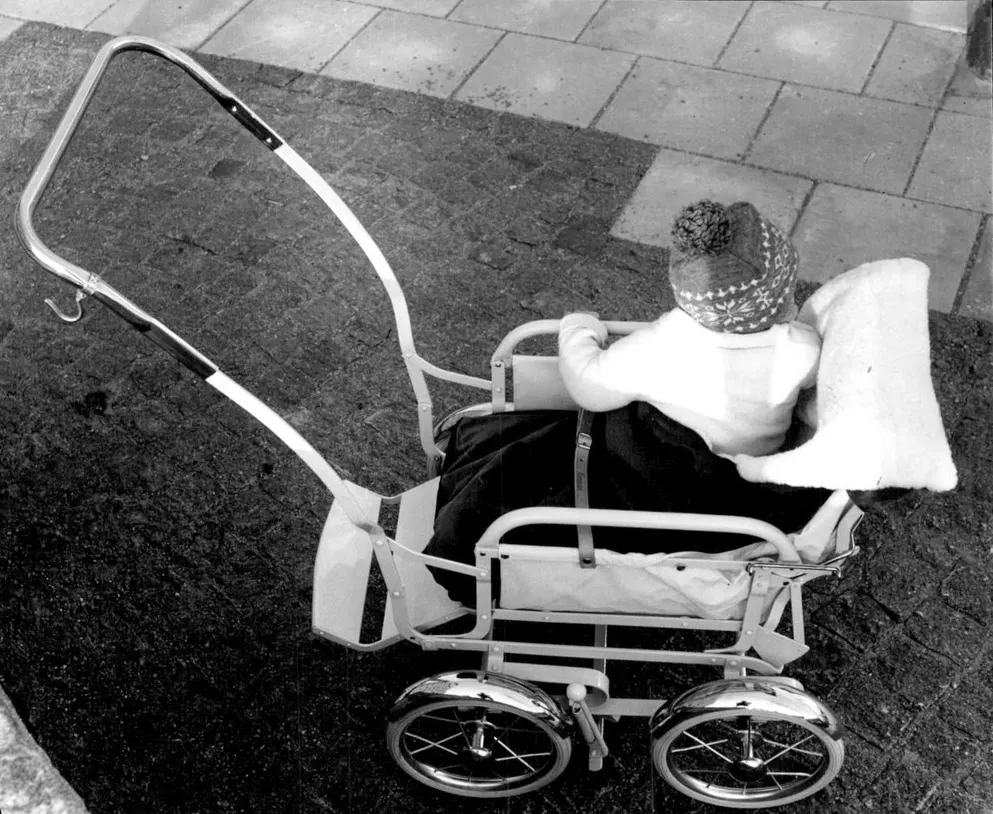
- Strollers: Test the brakes on a slope. Fold and unfold it to make sure the locks click firmly. Check the harness and buckles, and look for cracked frames or wheels that wobble.
- High chairs: Make sure the restraint system is complete, including the crotch strap or post. The tray should lock securely, and the chair shouldn't tip when you push on it.
- Play yards: Check the mesh for tears or holes, make sure the top rails lock, and only use the mattress pad that came with it. Don't add extra padding.
- Carriers and slings: Inspect the seams, buckles and fabric for wear, and look the model up for recalls. Slings in particular have been recalled in the past.
Skip entirely in Canada: baby walkers. They're banned there, and AboutKidsHealth notes it's illegal to import or sell them, even secondhand. Health Canada's advice is to destroy any you have and throw them away. AboutKidsHealth also recommends against baby bath seats and bath rings.
Toys and gifts
Used toys make great holiday gifts, especially big-ticket items like ride-ons, play kitchens and building sets. Before you wrap one:
- Check the age rating and small parts. Toys meant for older kids often have pieces small enough for a baby or toddler to choke on.
- Look for loose button batteries and magnets. Make sure battery compartments are screwed shut. Avoid toys with small magnets that could come loose.
- Be cautious with very old painted toys. Safety rules for paint and materials have tightened over the decades, so older toys may not meet today's standards. Keep vintage pieces as display collectibles rather than letting little ones chew on them.
- Check the cords and strings. Long cords can be a strangulation risk for young children.
- Clean everything. Wipe hard plastic with soap and water, and wash fabric items according to the label.
- Run a recall search for branded toys, just as you would for gear.
Smart habits for meeting a seller
- Ask questions before you go: model number, age, any damage, smoke-free or pet-free home, and whether the manual is included.
- Meet in a public, well-lit place for small items. For bulky items like cribs, bring someone with you, and ask to see the item assembled if you can.
- Bring a phone so you can run a recall search and look up the manual on the spot.
- Don't feel pressured. If something seems off, it's fine to say "no thanks" and leave.
If you're the seller
Clearing out outgrown gear before the holidays? Search for recalls before you list anything. Include the brand, model and manufacture date in your listing, mention any wear honestly, and add the manual or a link to it. Don't list items that can't legally be sold where you live, such as drop-side cribs or baby walkers in Canada. Rules can vary, so check your federal and local guidance if you're unsure.
Find kids' gear locally on Orbispin
Orbispin makes it easy to find secondhand baby and kids' items close to home, so you can see them in person before you buy:
- Browse For sale for strollers, high chairs, toys and more. You can also post a Wanted listing for something specific.
- Check Garage sales near you, where family-friendly finds often turn up.
- Pass on outgrown items, or pick up freebies, in Free stuff and Swap & barter.
If you're expecting a baby, you can also set up a Circle, Orbispin's private event and gift-list page. Friends and family can see what you still need and coordinate gifts without doubling up.
Sources
- Cribs, cradles and bassinets - Health Canada
- Is Your Child Safe? Sleep Time - Health Canada
- Cribs, Cradles and Bassinets Regulations (SOR/2016-152) - Canada Gazette
- Baby equipment safety - AboutKidsHealth (SickKids)
- Safe sleep - Parachute
- CPSC product safety regulations for vintage and secondhand sellers - The Vintage Seeker