How to Store a Motorcycle for Winter So It Starts in Spring
Fuel, battery, tires, chain and cover: a plain step-by-step for putting a motorcycle away for the winter, plus what to do if you'd rather sell it before spring.
By Orbispin··7 min read
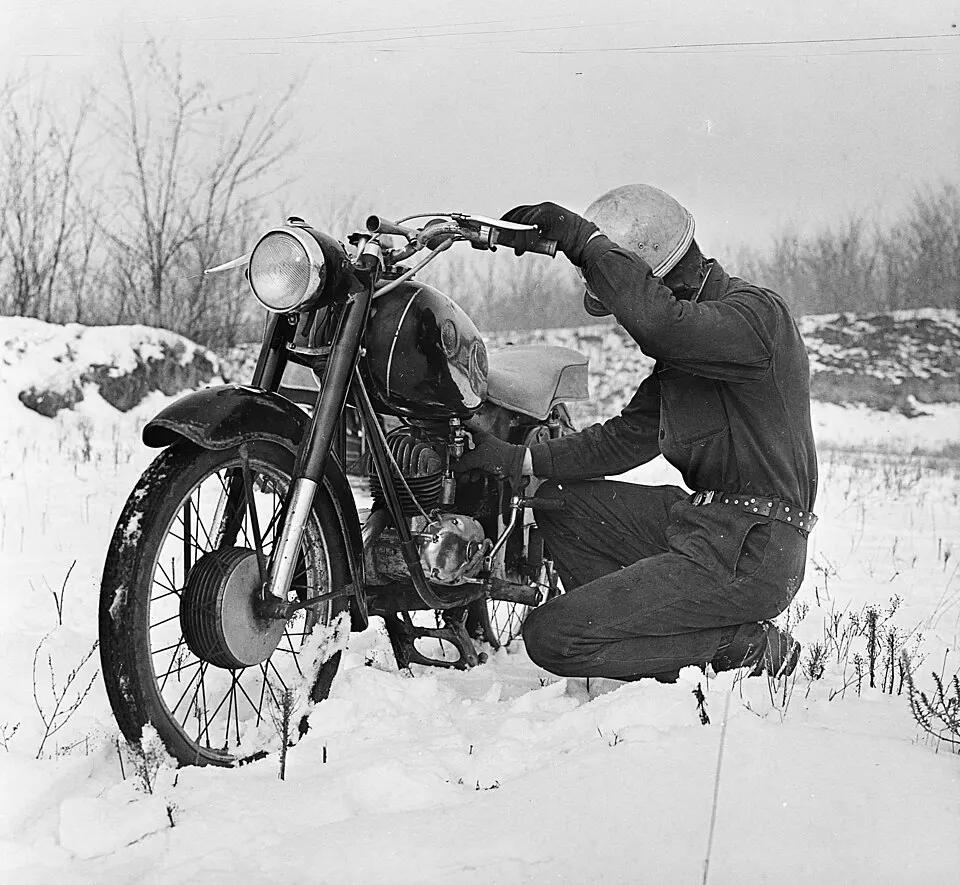
The bike that won't start in April usually got that way in November. Someone rode it home on a cold afternoon, parked it in the back of the garage with half a tank, and didn't touch it again for four months. By spring the battery is flat, the fuel has gone stale, and the rear tire has a flat spot where it sat on the concrete.
None of that is hard to prevent. A proper winter put-away takes an afternoon and maybe $60 to $100 in supplies if you don't already own a battery tender. Here's how to do it, in the order that makes sense.
Before you start: read your owner's manual
Every manufacturer has its own storage section, and it's usually a page or two near the back of the manual. It'll tell you the oil grade, the tire pressures and anything specific to your engine. Some advice floating around the internet contradicts other advice (fuel is the big one, more on that below), and your manual is the tiebreaker. A dealer guide from Woods Cycle Country makes the same point: storage recommendations vary between makes and models.
Wash it, then actually dry it
Road grime, bug guts and winter road salt sit on the paint and metal all season if you leave them there. Michelin's storage guide notes that cleaning before storage keeps dirt and debris from causing corrosion over the winter. Wash the bike, then ride it around the block or use a leaf blower to get water out of the crevices around the engine, switches and under the seat. A wet bike under a cover is a small greenhouse for rust.
If you want to go further, a coat of wax on the paint and a wipe of protectant on bare metal parts helps. This is the part most people skip, and it shows on chrome by March.
Change the oil now, not in spring
It feels backwards to change the oil before a bike sits, but used oil carries combustion byproducts and contaminants that you don't want sitting against engine internals for months. Michelin, Extra Space Storage and Harley-Davidson's insurance arm all recommend fresh oil and a new filter before storage. Then in spring you just ride.
Run the engine for a few minutes after the change to circulate the clean oil, and check the other fluids while you're at it. On liquid-cooled bikes, confirm the coolant mix gives enough freeze protection for your area. If your garage drops well below freezing, that matters.
Fuel: fill it and stabilize it (usually)
Most guides, including a pro mechanic interviewed by Men's Journal, say to fill the tank and add fuel stabilizer. A full tank leaves less air space for moisture to condense, which keeps rust off the inside of a steel tank. The stabilizer slows the fuel from breaking down.
Order matters. Add the stabilizer, then top off the tank so it mixes, then run the engine for five minutes or so to pull treated fuel through the lines and injectors or carburetor. Treated fuel sitting only in the tank doesn't help the parts that clog.
There's a minority view. Extra Space Storage suggests that for storage longer than six months you may want to empty the tank and coat the inside with fogging oil. Some carbureted bikes also have a manual recommendation to drain the float bowls. If you're putting a bike away for one winter, fill and stabilize is the common approach; if it's going to sit for a year or more, check your manual and consider asking a shop.
Keep the battery alive
A dead battery is the most common spring complaint, and a lead-acid battery that fully discharges over winter often can't be brought back. You have two good options.
- Leave the battery in the bike and connect a battery tender (a smart maintainer, not an old-style charger that can overcharge). Harley-Davidson's insurance guide recommends cleaning the terminals and keeping a tender connected for the entire winter.
- If there's no outlet where the bike sits, remove the battery and store it somewhere cool and dry indoors, on a maintainer.
Many bikes have a small constant draw from the clock, alarm or ECU even when switched off, so "it was fine when I parked it" doesn't mean much after 10 weeks. If you're buying a maintainer, check that it matches your battery type. Lithium batteries often need a charger made for them.
Tires, chain and the small stuff
Inflate the tires to the pressure on the frame sticker or in the manual before you walk away. Tires lose air slowly in the cold, and an underinflated tire carrying a 500-pound bike for months is how you get flat spots. A center stand helps if your bike has one. Front and rear paddock stands that lift both wheels off the ground are better. Failing that, roll the bike a foot or so every few weeks so the same patch of rubber isn't always taking the weight.
Clean and lube the chain before storage, while it's warm if you can, so the lube works in. Belt-drive owners should look over the belt for cracks or fraying and check the tension. While you're down there, put a little lube on cables, levers and the side stand pivot.
Last, keep critters out. Mice love an airbox in winter. Stuff a rag or a purpose-made plug into the exhaust and cover the intake, and tie a bright tag to the handlebar so you remember to take them out before you start it. Starting a bike with a rag in the pipe is a mistake people make exactly once.
Where to keep it
Indoors and dry beats everything. Harley-Davidson's guide suggests a well-ventilated indoor space so moisture doesn't collect under the cover. Keep the bike away from fertilizer, pool chemicals and road salt bags, which give off fumes that can corrode metal.
Use a breathable cover indoors or out. A plastic tarp traps condensation against the paint. If the bike has to live outside, a waterproof but breathable motorcycle cover is the minimum, and a small shelter or carport is a big step up.
If you don't have a garage, renting a storage unit or splitting a garage spot with a friend is common. Prices vary a lot by city, so call around before December when spots fill up.
Insurance and registration
Don't cancel your insurance just because the bike is parked. Theft, fire and a garage roof collapsing under snow all happen in winter, and Harley-Davidson's insurance guide recommends keeping coverage active. Some insurers offer a reduced "storage" or comprehensive-only option for the off-season, so ask yours. Rules on whether you can drop liability coverage while a vehicle is still registered differ by state and province, so check with your DMV or provincial licensing office before you change anything.
Riding somewhere warm
If you're in Austin, Phoenix or along the Gulf Coast, "winter storage" might mean a few weeks of not riding over the holidays. You don't need the full routine, but the same problems show up faster than you'd think. Keep a tender on the battery, add stabilizer if the bike will sit for more than a month, and check tire pressure before your first ride after a cold snap.
Spring checklist
When the weather turns, give the bike a once-over before the first ride:
- Remove the exhaust plug and intake cover
- Reinstall or reconnect the battery and check that it holds a charge
- Set tire pressure and look for cracks or flat spots
- Check oil level, brake fluid and coolant
- Test brakes, lights, horn and turn signals in the driveway
- Take the first ride slowly; tires and brakes take a few minutes to warm up
Storing it, or selling it
Some riders get to November, look at the bike and realize they rode it four times this year. Storage costs money and effort, and selling now means someone else deals with the battery tender. On the other hand, more people shop for motorcycles when riding weather returns, so waiting until early spring may get you more interest. Either way, a bike with recent oil service and a clean, documented winterization is an easier sell than one that just "sat for a while."
How Orbispin helps
Orbispin is a free local marketplace, so it's an easy place to list a bike you're done storing, or to pick up a stand, cover or tender from someone nearby. Browse or post in Motorcycles, and look in Other vehicles for scooters, dirt bikes and ATVs. If you need a truck to haul a bike to storage or a shop, check Trucks & vans, and you'll find everything else on wheels in Vehicles.
Sources
- Motorcycle winter storage: essential tips for safe winterizing (Michelin)
- Motorcycle Winter Storage Tips: How to Winterize a Motorcycle (Harley-Davidson Insurance)
- How to Winterize a Motorcycle for Vehicle Storage (Extra Space Storage)
- Motorcycle Winter Storage Guide: Winterize the Right Way (Woods Cycle Country)
- Motorcycle Winter Storage Checklist: Fuel, Battery, and Tires (Men's Journal)
- Motorcycle Winter Storage Tips (Sherpa Auto Transport)